Hormuz and the Petrodollar: How Iran Turned Geography into Leverage
- Shumin Wang

- Jul 14
- 6 min read
On February 28, 2026, under the joint US-Israeli campaign 'Operation Epic Fury', Israeli jets struck Ayatollah Ali Khamenei’s compound in Tehran, killing 86-year-old Khamenei alongside almost the entire upper tier of Iran's military command. While the globe predicted another swift setback from Iran, Tehran instead launched continuous retaliatory strikes on regional U.S. bases (see Figure 1). It capitalised on its geographical advantage, effectively choking one of the world’s vital energy routes through the Strait of Hormuz, plunging the Middle East into deep conflict. By late May, this demonstration of Iranian leverage forced a deliberate pause from Washington.
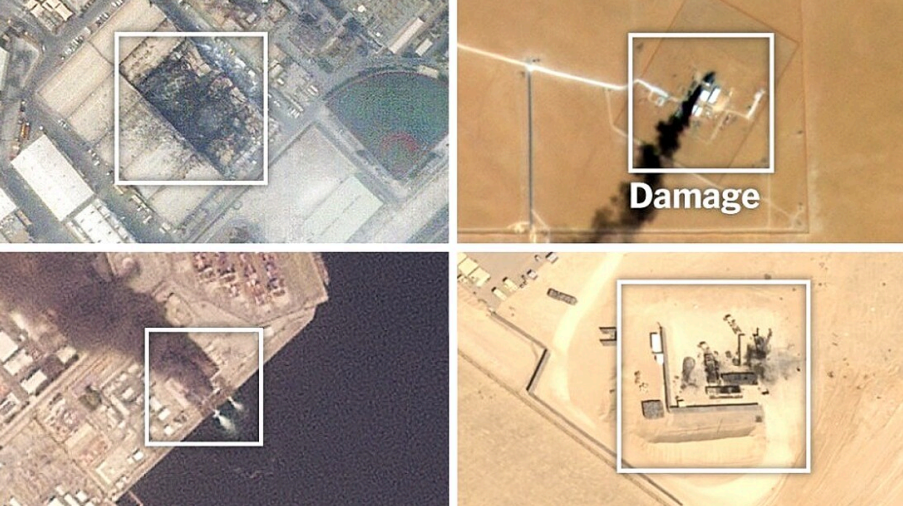
Currently, the resulting ceasefire remains incredibly fragile. On May 29th, JD Vance admitted to reporters that the administration's backing is still highly volatile:
It's hard to say exactly when or if the president's going to sign... We're going back and forth on a couple of language points.
Market analysts reported that 11 million barrels of crude are currently frozen in the impassable strait, making the stakes of this military and digital conflict no longer merely regional and instead placing severe pressure on the global economy.
Market analysts reported that 11 million barrels of crude are currently frozen in the impassable strait, making the stakes of this military and digital conflict no longer merely regional and instead placing severe pressure on the global economy.
Despite the current state of the relationship, Iran and the United States had a honeymoon period in which Iran experienced modernisation and economic growth – at the expense of its oil sovereignty and inflation. In 1953, a CIA-backed coup in Iran overthrew Prime Minister Mossadegh over oil nationalisation and replaced the ruler with a pro-Western monarch. It is generally agreed that it sowed the seeds that ultimately triggered the 1979 Islamic Revolution. This intervention also fostered a foundational narrative that views the U.S. petrodollar monopoly not just as currency but as a mechanism of Western geopolitical coercion.
Today, this defiance is constitutionally established through Velayat-e Faqih (Guardianship of the Islamic Jurist), placing the supreme leader's authority over foreign policy entirely above elected bodies. If that is the ideological core of Iran, the Islamic Revolutionary Guard Corps (IRGC) is its primary enforcement mechanism. By controlling an estimated 20% to 30% of Iran’s GDP across energy and infrastructure sectors, the IRGC functions not only as a military organisation but also as an economic empire. Due to its importance in defending the regime and supporting regional allies and proxy groups, it is involved with Iran’s ballistic missile programme as well as military defence of highly secure, underground nuclear enrichment facilities like Fordow and Natanz, ensuring that domestic regime survival and Middle Eastern instability remain deeply, permanently intertwined.

How is the Iran-U.S. war connected to nuclear enrichment? The current explosive standoff was systematically triggered by the 2018 collapse of the Joint Comprehensive Plan of Action (JCPOA), whose international efforts had previously kept Iran’s nuclear programme under the International Atomic Energy Agency (IAEA) oversight in return for sanction relief. The collapse was driven by intense domestic and international pressure over Iran’s future nuclear capabilities: longstanding Republican opposition to the agreement, the Trump administration's desire to reverse the Obama-era foreign policy, and ultimately Israeli security anxieties fuelled by Prime Minister Netanyahu regarding regional vulnerability.
This set of the ongoing, step-by-step security dilemma became one of Trump’s crucial justifications for initiating a war.
2018-2019 Observations: Following the U.S. exit, Tehran initially remained in compliance for a year, attempting to secure economic benefits through remaining signatories.
2019 Pivot: However, Iran rolled back JCPOA thresholds, deploying centrifuges and rapidly enriched uranium to 60% purity, a level far above civilian reactor requirements and much closer to weapons-grade material after economic relief failed to materialise under heavy U.S. sanctions.
From Tehran’s perspective, this advanced capability serves as a vital deterrence against perceived threats from Israel, the U.S., and rival Gulf nations (even without building an actual bomb). Iranian officials had framed enrichment as a symbol of scientific independence and bargaining leverage to mitigate domestic economic recessions, still noting that
Abandoning the program outright would not only represent a forfeiture of those past investments but could also POSE A SERIOUS THREAT TO THE REGIME'S CREDIBILITY.
- Middle East Monitor
Unlike North Korea, which possesses a fully militarised nuclear delivery system, Iran has yet to produce a confirmed weapon, prompting it to rely heavily on its "Axis of Resistance" to project power defensively. By funding regional proxies including Hezbollah in Lebanon, Hamas in Gaza, and the Houthis in Yemen (see Figure 3), Iran has established a forward-defence buffer zone designed to keep conflicts away from its borders

For the U.S., despite Trump’s stressing that he is “in no hurry” to sign an Iran deal, the underlying strategic realities indicate severe American constraints.

Iran is in a very bad situation
- President Donald Trump
Trump’s position has been that any settlement must guarantee no Iranian nuclear weapon, free passage through Hormuz, and removal of mines, with continued U.S. military strikes if otherwise . His administration is talking as if time is on Washington’s side, but the ongoing conflict exposed deep vulnerabilities. Domestically, the war has triggered sharp fuel price hikes and has pushed inflation in April to 3.8%, forcing the White House to search for visible gas-price relief to mitigate electoral risks.
The military reality is less forgiving. A CSIS assessment revealed that the 39-day bombing and air-defence campaign against Iran severely depleted U.S. munitions and interceptor stockpiles. Accordingly, restoring critical supplies, like Tomahawks and THAAD interceptors, to pre-war levels may take until 2030 to 2031, leaving a “window of vulnerability” for potential conflict. This highlights the effectiveness of Iran’s asymmetrical economic attrition strategy: by utilising drones, missiles, mines, and regional proxies, Tehran forces Washington to expend costly military equipment (interceptors, cruise missiles, and naval deployments) at an unsustainable rate.
Most importantly, the dominance of the U.S. dollar relies heavily on the perception that the U.S. can stabilise the energy order that still trades mainly through dollar-based markets. However, the U.S. Energy Information Administration (EIA) notes that 89% of crude oil and condensate moving through Hormuz in early 2025 were to Asian markets. If Washington cannot secure these vital shipments without exhausting scarce missiles, raising oil prices, and fuelling domestic inflation, Asian energy importers will face stronger incentives to diversify their financial settlement channels and political alignments, leaving a gap for alternatives to strengthen. In the long run, the U.S. cannot protect dollar primacy by fighting an open-ended war that makes energy trade more expensive, less secure, and more politically divisive.
Inside Iran, the US-led naval blockade and political pressure have produced outcomes contrary to Washington’s strategic intentions. Rather than triggering a nationwide uprising or regime collapse following the death of Supreme Leader Ayatollah Khamenei in the 28th February airstrikes, the external threats have enabled a rapid consolidation of hardline authority. The appointment of Mojtaba Khamenei as the new Supreme Leader signalled that the military-security apparatus remains firmly in control in the hands of hardliners, tipping the balance of pro- and anti-Western parties. While Washington explicitly messaged the Iranian public to “seize their destiny”, Tehran imposed an internet blackout in response.
Network-measurement data revealed a highly centralised disruption, with 96.5% to 97.4% of the Iranian network blocked from the globe. This blackout effectively paralysed opposition media, preventing independent documentation and protest mobilisation, allowing the correction of state-managed narratives. In fact, the physical blockade of ports and continued bombardment, which halted commercial vessels and created widespread domestic scarcity, served as a propaganda gift for Tehran. Hardliners framed all domestic dissent as the result of collaboration with a foreign siege, pressuring much of the public into compliance with the regime and supporting the IRGC's stance against Western negotiations. Ultimately, the combination of physical degradation and digital isolation allows the IRGC to exploit the crisis conditions, disciplining the population and converting external military pressure into solidifying internal control.
The military stalemate has altered Middle East diplomacy by exposing the limits of U.S. supremacy. Washington's inability to secure the Strait of Hormuz without incurring severe military, economic, and political costs signals to regional powers and Asian energy consumers that the American security umbrella is no longer unquestioned. As states look increasingly toward Beijing and Moscow and alternative settlement systems, the crisis accelerates a shift toward multipolarity. The petrodollar may not collapse overnight, but Iran has shown that its geography, missiles, and economic disruption can weaken the foundations of U.S. power.

Comments